Questõesde UNIFESP 2017 sobre Inglês

1
1
1
Foram encontradas 15 questões
9c007417-dd
UNIFESP 2017 - Inglês - Interpretação de texto | Reading comprehension

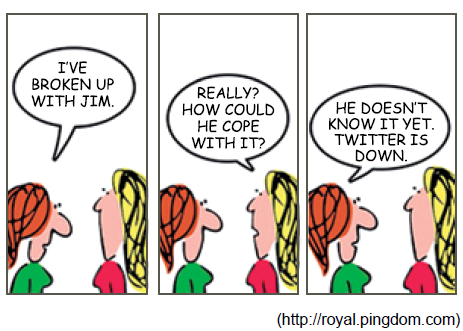
Examine a tira.


A tira evidencia que

A
as duas mulheres desaprovam o comportamento de Jim.
B
as duas mulheres preferem conversar pessoalmente a usar mídias sociais.
C
a mulher de roupa vermelha desaprova o fato de a mulher de roupa verde ainda não ter conversado com Jim.
D
a mulher de roupa vermelha ficou triste com a separação do casal.
E
a mulher de roupa verde tentou usar uma mídia social para resolver seu relacionamento afetivo.
9bfd257f-dd
UNIFESP 2017 - Inglês - Vocabulário | Vocabulary, Interpretação de texto | Reading comprehension

No trecho do quinto parágrafo “they would still think so today”, o termo em destaque se refere ao fato de as pessoas considerarem que alguém 

Mobile milestones: how your phone
became an essential part of your life


    Has any device changed our lives as much, and as quickly, as the mobile phone? There are people today for whom the world of address books, street atlases and phone boxes seems very far away, lost in the mists of time. Following, there are just some of the big milestones from the past 30 years that have made almost everything we do easier, more public and very, very fast.
• The first phones arrive – and become status symbols Few people got the chance to use the very early mobile phones. The first call was made in New York in 1973, but handsets with a network to use were not available until 1983 in the US, and 1985 in the UK. That first British mobile phone was essentially a heavy briefcase with a receiver attached by a wire. It cost £2,000 (£5,000 in today’s prices), and gave you half an hour’s chat on an overnight charge. Making a call was not something you could do subtly, but that wasn’t the point; the first handsets were there to be seen. They sent a message that you were bold and confident with new technology, that you were busy and important enough to need a mobile phone, and were rich enough to buy one.
• Text messages spawn a whole new language
    The first mobiles worked with analogue signals and could only make phone calls, but the digital ones that followed in the early 1990s could send SMS messages as well. After the first message was sent on 3 December 1992, texting took off like a rocket, even though it was still a pretty cumbersome procedure. Handsets with predictive text would make things easier, but in the 1990s you could save a lot of time by removing all excess letters from a message, often the vowels, and so txtspk ws brn. Today the average mobile phone sends more than 100 texts per month.
• Phones turn us all into photographers...
    There seemed to be no good reason for the first camera phones, which began to appear in 2002, with resolutions of about 0.3 megapixels. They took grainy, blurry pictures on postage stamp-sized screens, and even these filled the phone’s memory in no time. Gradually, though, as the quality improved, the uses followed. As well as the usual photos of friends and family, they were handy for “saving” pieces of paper, and in pubs you could take a picture of the specials board and take it back to your table. Modern camera phones have changed beyond recognition in the past 20 years. The new mobile phones boast the highest resolution dual camera on a smartphone: a 16-megapixel camera and a 20-megapixel camera side-by-side. The dual camera allows users to focus on their subjects, while blurring out the background, producing professional-looking portraits.
• …and we turn ourselves into celebrities
    Twenty years ago people would have thought you a little strange if you took flattering photos of yourself and your lifestyle and then distributed them to your friends – let alone to members of the public. If you used printed photographs rather than a smartphone app, they would still think so today. Yet sharing our lives on social media is now the norm, not the exception – and it was the camera phone that made it all possible. Now, some phones come with an enormous 64GB of memory, so you can capture, share and store an almost countless number of videos and pictures – well, certainly enough to keep up with the Kardashians.

(www.theguardian.com, 07.07.2017. Adaptado.)
A
não tem noção de privacidade.
B
respeita as normas sociais.
C
busca apreciação.
D
gosta de se exibir.
E
é um pouco esquisito.
9bf97500-dd
UNIFESP 2017 - Inglês - Interpretação de texto | Reading comprehension

De acordo com as informações do quinto parágrafo,

Mobile milestones: how your phone
became an essential part of your life


    Has any device changed our lives as much, and as quickly, as the mobile phone? There are people today for whom the world of address books, street atlases and phone boxes seems very far away, lost in the mists of time. Following, there are just some of the big milestones from the past 30 years that have made almost everything we do easier, more public and very, very fast.
• The first phones arrive – and become status symbols Few people got the chance to use the very early mobile phones. The first call was made in New York in 1973, but handsets with a network to use were not available until 1983 in the US, and 1985 in the UK. That first British mobile phone was essentially a heavy briefcase with a receiver attached by a wire. It cost £2,000 (£5,000 in today’s prices), and gave you half an hour’s chat on an overnight charge. Making a call was not something you could do subtly, but that wasn’t the point; the first handsets were there to be seen. They sent a message that you were bold and confident with new technology, that you were busy and important enough to need a mobile phone, and were rich enough to buy one.
• Text messages spawn a whole new language
    The first mobiles worked with analogue signals and could only make phone calls, but the digital ones that followed in the early 1990s could send SMS messages as well. After the first message was sent on 3 December 1992, texting took off like a rocket, even though it was still a pretty cumbersome procedure. Handsets with predictive text would make things easier, but in the 1990s you could save a lot of time by removing all excess letters from a message, often the vowels, and so txtspk ws brn. Today the average mobile phone sends more than 100 texts per month.
• Phones turn us all into photographers...
    There seemed to be no good reason for the first camera phones, which began to appear in 2002, with resolutions of about 0.3 megapixels. They took grainy, blurry pictures on postage stamp-sized screens, and even these filled the phone’s memory in no time. Gradually, though, as the quality improved, the uses followed. As well as the usual photos of friends and family, they were handy for “saving” pieces of paper, and in pubs you could take a picture of the specials board and take it back to your table. Modern camera phones have changed beyond recognition in the past 20 years. The new mobile phones boast the highest resolution dual camera on a smartphone: a 16-megapixel camera and a 20-megapixel camera side-by-side. The dual camera allows users to focus on their subjects, while blurring out the background, producing professional-looking portraits.
• …and we turn ourselves into celebrities
    Twenty years ago people would have thought you a little strange if you took flattering photos of yourself and your lifestyle and then distributed them to your friends – let alone to members of the public. If you used printed photographs rather than a smartphone app, they would still think so today. Yet sharing our lives on social media is now the norm, not the exception – and it was the camera phone that made it all possible. Now, some phones come with an enormous 64GB of memory, so you can capture, share and store an almost countless number of videos and pictures – well, certainly enough to keep up with the Kardashians.

(www.theguardian.com, 07.07.2017. Adaptado.)
A
mesmo com a grande capacidade de armazenamento dos celulares modernos, as pessoas ainda imprimem muitas fotos.
B
grande parte das pessoas ainda considera que a divulgação de “selfies” não é de bom tom.
C
desconhecidos podem fazer mau uso das fotos publicadas em mídias sociais.
D
os jovens desejam se transformar em celebridades, como ocorreu com a família Kardashian.
E
houve uma grande mudança de comportamento em relação à divulgação pública de fotos nos últimos 20 anos.
9bf6274b-dd
UNIFESP 2017 - Inglês - Advérbios e conjunções | Adverbs and conjunctions

No trecho do quarto parágrafo “The dual camera allows users to focus on their subjects, while blurring out the background”, o termo em destaque indica ideia de

Mobile milestones: how your phone
became an essential part of your life


    Has any device changed our lives as much, and as quickly, as the mobile phone? There are people today for whom the world of address books, street atlases and phone boxes seems very far away, lost in the mists of time. Following, there are just some of the big milestones from the past 30 years that have made almost everything we do easier, more public and very, very fast.
• The first phones arrive – and become status symbols Few people got the chance to use the very early mobile phones. The first call was made in New York in 1973, but handsets with a network to use were not available until 1983 in the US, and 1985 in the UK. That first British mobile phone was essentially a heavy briefcase with a receiver attached by a wire. It cost £2,000 (£5,000 in today’s prices), and gave you half an hour’s chat on an overnight charge. Making a call was not something you could do subtly, but that wasn’t the point; the first handsets were there to be seen. They sent a message that you were bold and confident with new technology, that you were busy and important enough to need a mobile phone, and were rich enough to buy one.
• Text messages spawn a whole new language
    The first mobiles worked with analogue signals and could only make phone calls, but the digital ones that followed in the early 1990s could send SMS messages as well. After the first message was sent on 3 December 1992, texting took off like a rocket, even though it was still a pretty cumbersome procedure. Handsets with predictive text would make things easier, but in the 1990s you could save a lot of time by removing all excess letters from a message, often the vowels, and so txtspk ws brn. Today the average mobile phone sends more than 100 texts per month.
• Phones turn us all into photographers...
    There seemed to be no good reason for the first camera phones, which began to appear in 2002, with resolutions of about 0.3 megapixels. They took grainy, blurry pictures on postage stamp-sized screens, and even these filled the phone’s memory in no time. Gradually, though, as the quality improved, the uses followed. As well as the usual photos of friends and family, they were handy for “saving” pieces of paper, and in pubs you could take a picture of the specials board and take it back to your table. Modern camera phones have changed beyond recognition in the past 20 years. The new mobile phones boast the highest resolution dual camera on a smartphone: a 16-megapixel camera and a 20-megapixel camera side-by-side. The dual camera allows users to focus on their subjects, while blurring out the background, producing professional-looking portraits.
• …and we turn ourselves into celebrities
    Twenty years ago people would have thought you a little strange if you took flattering photos of yourself and your lifestyle and then distributed them to your friends – let alone to members of the public. If you used printed photographs rather than a smartphone app, they would still think so today. Yet sharing our lives on social media is now the norm, not the exception – and it was the camera phone that made it all possible. Now, some phones come with an enormous 64GB of memory, so you can capture, share and store an almost countless number of videos and pictures – well, certainly enough to keep up with the Kardashians.

(www.theguardian.com, 07.07.2017. Adaptado.)
A
alternância.
B
semelhança.
C
comparação.
D
previsão.
E
simultaneidade.
9bf30fa8-dd
UNIFESP 2017 - Inglês - Tradução | Translation

No trecho do quarto parágrafo “filled the phone’s memory in no time”, a expressão em destaque equivale, em português, a

Mobile milestones: how your phone
became an essential part of your life


    Has any device changed our lives as much, and as quickly, as the mobile phone? There are people today for whom the world of address books, street atlases and phone boxes seems very far away, lost in the mists of time. Following, there are just some of the big milestones from the past 30 years that have made almost everything we do easier, more public and very, very fast.
• The first phones arrive – and become status symbols Few people got the chance to use the very early mobile phones. The first call was made in New York in 1973, but handsets with a network to use were not available until 1983 in the US, and 1985 in the UK. That first British mobile phone was essentially a heavy briefcase with a receiver attached by a wire. It cost £2,000 (£5,000 in today’s prices), and gave you half an hour’s chat on an overnight charge. Making a call was not something you could do subtly, but that wasn’t the point; the first handsets were there to be seen. They sent a message that you were bold and confident with new technology, that you were busy and important enough to need a mobile phone, and were rich enough to buy one.
• Text messages spawn a whole new language
    The first mobiles worked with analogue signals and could only make phone calls, but the digital ones that followed in the early 1990s could send SMS messages as well. After the first message was sent on 3 December 1992, texting took off like a rocket, even though it was still a pretty cumbersome procedure. Handsets with predictive text would make things easier, but in the 1990s you could save a lot of time by removing all excess letters from a message, often the vowels, and so txtspk ws brn. Today the average mobile phone sends more than 100 texts per month.
• Phones turn us all into photographers...
    There seemed to be no good reason for the first camera phones, which began to appear in 2002, with resolutions of about 0.3 megapixels. They took grainy, blurry pictures on postage stamp-sized screens, and even these filled the phone’s memory in no time. Gradually, though, as the quality improved, the uses followed. As well as the usual photos of friends and family, they were handy for “saving” pieces of paper, and in pubs you could take a picture of the specials board and take it back to your table. Modern camera phones have changed beyond recognition in the past 20 years. The new mobile phones boast the highest resolution dual camera on a smartphone: a 16-megapixel camera and a 20-megapixel camera side-by-side. The dual camera allows users to focus on their subjects, while blurring out the background, producing professional-looking portraits.
• …and we turn ourselves into celebrities
    Twenty years ago people would have thought you a little strange if you took flattering photos of yourself and your lifestyle and then distributed them to your friends – let alone to members of the public. If you used printed photographs rather than a smartphone app, they would still think so today. Yet sharing our lives on social media is now the norm, not the exception – and it was the camera phone that made it all possible. Now, some phones come with an enormous 64GB of memory, so you can capture, share and store an almost countless number of videos and pictures – well, certainly enough to keep up with the Kardashians.

(www.theguardian.com, 07.07.2017. Adaptado.)
A
instantaneamente.
B
nunca.
C
de modo precipitado.
D
de vez em quando.
E
lentamente.
9bef9ae4-dd
UNIFESP 2017 - Inglês - Interpretação de texto | Reading comprehension

No trecho do quarto parágrafo “and even these filled the phone’s memory”, o termo em destaque se refere a

Mobile milestones: how your phone
became an essential part of your life


    Has any device changed our lives as much, and as quickly, as the mobile phone? There are people today for whom the world of address books, street atlases and phone boxes seems very far away, lost in the mists of time. Following, there are just some of the big milestones from the past 30 years that have made almost everything we do easier, more public and very, very fast.
• The first phones arrive – and become status symbols Few people got the chance to use the very early mobile phones. The first call was made in New York in 1973, but handsets with a network to use were not available until 1983 in the US, and 1985 in the UK. That first British mobile phone was essentially a heavy briefcase with a receiver attached by a wire. It cost £2,000 (£5,000 in today’s prices), and gave you half an hour’s chat on an overnight charge. Making a call was not something you could do subtly, but that wasn’t the point; the first handsets were there to be seen. They sent a message that you were bold and confident with new technology, that you were busy and important enough to need a mobile phone, and were rich enough to buy one.
• Text messages spawn a whole new language
    The first mobiles worked with analogue signals and could only make phone calls, but the digital ones that followed in the early 1990s could send SMS messages as well. After the first message was sent on 3 December 1992, texting took off like a rocket, even though it was still a pretty cumbersome procedure. Handsets with predictive text would make things easier, but in the 1990s you could save a lot of time by removing all excess letters from a message, often the vowels, and so txtspk ws brn. Today the average mobile phone sends more than 100 texts per month.
• Phones turn us all into photographers...
    There seemed to be no good reason for the first camera phones, which began to appear in 2002, with resolutions of about 0.3 megapixels. They took grainy, blurry pictures on postage stamp-sized screens, and even these filled the phone’s memory in no time. Gradually, though, as the quality improved, the uses followed. As well as the usual photos of friends and family, they were handy for “saving” pieces of paper, and in pubs you could take a picture of the specials board and take it back to your table. Modern camera phones have changed beyond recognition in the past 20 years. The new mobile phones boast the highest resolution dual camera on a smartphone: a 16-megapixel camera and a 20-megapixel camera side-by-side. The dual camera allows users to focus on their subjects, while blurring out the background, producing professional-looking portraits.
• …and we turn ourselves into celebrities
    Twenty years ago people would have thought you a little strange if you took flattering photos of yourself and your lifestyle and then distributed them to your friends – let alone to members of the public. If you used printed photographs rather than a smartphone app, they would still think so today. Yet sharing our lives on social media is now the norm, not the exception – and it was the camera phone that made it all possible. Now, some phones come with an enormous 64GB of memory, so you can capture, share and store an almost countless number of videos and pictures – well, certainly enough to keep up with the Kardashians.

(www.theguardian.com, 07.07.2017. Adaptado.)
A
grainy, blurry pictures.
B
postage stamp-sized screens.
C
phone’s memory.
D
camera phones.
E
resolutions of about 0.3 megapixels.
9bec1a92-dd
UNIFESP 2017 - Inglês - Interpretação de texto | Reading comprehension

According to the fourth paragraph,

Mobile milestones: how your phone
became an essential part of your life


    Has any device changed our lives as much, and as quickly, as the mobile phone? There are people today for whom the world of address books, street atlases and phone boxes seems very far away, lost in the mists of time. Following, there are just some of the big milestones from the past 30 years that have made almost everything we do easier, more public and very, very fast.
• The first phones arrive – and become status symbols Few people got the chance to use the very early mobile phones. The first call was made in New York in 1973, but handsets with a network to use were not available until 1983 in the US, and 1985 in the UK. That first British mobile phone was essentially a heavy briefcase with a receiver attached by a wire. It cost £2,000 (£5,000 in today’s prices), and gave you half an hour’s chat on an overnight charge. Making a call was not something you could do subtly, but that wasn’t the point; the first handsets were there to be seen. They sent a message that you were bold and confident with new technology, that you were busy and important enough to need a mobile phone, and were rich enough to buy one.
• Text messages spawn a whole new language
    The first mobiles worked with analogue signals and could only make phone calls, but the digital ones that followed in the early 1990s could send SMS messages as well. After the first message was sent on 3 December 1992, texting took off like a rocket, even though it was still a pretty cumbersome procedure. Handsets with predictive text would make things easier, but in the 1990s you could save a lot of time by removing all excess letters from a message, often the vowels, and so txtspk ws brn. Today the average mobile phone sends more than 100 texts per month.
• Phones turn us all into photographers...
    There seemed to be no good reason for the first camera phones, which began to appear in 2002, with resolutions of about 0.3 megapixels. They took grainy, blurry pictures on postage stamp-sized screens, and even these filled the phone’s memory in no time. Gradually, though, as the quality improved, the uses followed. As well as the usual photos of friends and family, they were handy for “saving” pieces of paper, and in pubs you could take a picture of the specials board and take it back to your table. Modern camera phones have changed beyond recognition in the past 20 years. The new mobile phones boast the highest resolution dual camera on a smartphone: a 16-megapixel camera and a 20-megapixel camera side-by-side. The dual camera allows users to focus on their subjects, while blurring out the background, producing professional-looking portraits.
• …and we turn ourselves into celebrities
    Twenty years ago people would have thought you a little strange if you took flattering photos of yourself and your lifestyle and then distributed them to your friends – let alone to members of the public. If you used printed photographs rather than a smartphone app, they would still think so today. Yet sharing our lives on social media is now the norm, not the exception – and it was the camera phone that made it all possible. Now, some phones come with an enormous 64GB of memory, so you can capture, share and store an almost countless number of videos and pictures – well, certainly enough to keep up with the Kardashians.

(www.theguardian.com, 07.07.2017. Adaptado.)
A
side-by-side dual cameras can only be used professionally.
B
camera phones appeared to be pointless at the beginning.
C
initial blurry pictures may be considered creative photography nowadays.
D
the amount of megapixels does not ensure the production of good portraits.
E
it took 20 years for the first camera phone to be engineered.
9be8a461-dd
UNIFESP 2017 - Inglês - Vocabulário | Vocabulary

No trecho do terceiro parágrafo “by removing all excess letters from a message, often the vowels, and so txtspk ws brn”, o termo em destaque indica ideia de

Mobile milestones: how your phone
became an essential part of your life


    Has any device changed our lives as much, and as quickly, as the mobile phone? There are people today for whom the world of address books, street atlases and phone boxes seems very far away, lost in the mists of time. Following, there are just some of the big milestones from the past 30 years that have made almost everything we do easier, more public and very, very fast.
• The first phones arrive – and become status symbols Few people got the chance to use the very early mobile phones. The first call was made in New York in 1973, but handsets with a network to use were not available until 1983 in the US, and 1985 in the UK. That first British mobile phone was essentially a heavy briefcase with a receiver attached by a wire. It cost £2,000 (£5,000 in today’s prices), and gave you half an hour’s chat on an overnight charge. Making a call was not something you could do subtly, but that wasn’t the point; the first handsets were there to be seen. They sent a message that you were bold and confident with new technology, that you were busy and important enough to need a mobile phone, and were rich enough to buy one.
• Text messages spawn a whole new language
    The first mobiles worked with analogue signals and could only make phone calls, but the digital ones that followed in the early 1990s could send SMS messages as well. After the first message was sent on 3 December 1992, texting took off like a rocket, even though it was still a pretty cumbersome procedure. Handsets with predictive text would make things easier, but in the 1990s you could save a lot of time by removing all excess letters from a message, often the vowels, and so txtspk ws brn. Today the average mobile phone sends more than 100 texts per month.
• Phones turn us all into photographers...
    There seemed to be no good reason for the first camera phones, which began to appear in 2002, with resolutions of about 0.3 megapixels. They took grainy, blurry pictures on postage stamp-sized screens, and even these filled the phone’s memory in no time. Gradually, though, as the quality improved, the uses followed. As well as the usual photos of friends and family, they were handy for “saving” pieces of paper, and in pubs you could take a picture of the specials board and take it back to your table. Modern camera phones have changed beyond recognition in the past 20 years. The new mobile phones boast the highest resolution dual camera on a smartphone: a 16-megapixel camera and a 20-megapixel camera side-by-side. The dual camera allows users to focus on their subjects, while blurring out the background, producing professional-looking portraits.
• …and we turn ourselves into celebrities
    Twenty years ago people would have thought you a little strange if you took flattering photos of yourself and your lifestyle and then distributed them to your friends – let alone to members of the public. If you used printed photographs rather than a smartphone app, they would still think so today. Yet sharing our lives on social media is now the norm, not the exception – and it was the camera phone that made it all possible. Now, some phones come with an enormous 64GB of memory, so you can capture, share and store an almost countless number of videos and pictures – well, certainly enough to keep up with the Kardashians.

(www.theguardian.com, 07.07.2017. Adaptado.)
A
concordância.
B
exemplificação.
C
condição.
D
decorrência.
E
resumo.
9be4ad73-dd
UNIFESP 2017 - Inglês - Interpretação de texto | Reading comprehension

According to the third paragraph, people started to shorten words when writing messages by mobile phone because

Mobile milestones: how your phone
became an essential part of your life


    Has any device changed our lives as much, and as quickly, as the mobile phone? There are people today for whom the world of address books, street atlases and phone boxes seems very far away, lost in the mists of time. Following, there are just some of the big milestones from the past 30 years that have made almost everything we do easier, more public and very, very fast.
• The first phones arrive – and become status symbols Few people got the chance to use the very early mobile phones. The first call was made in New York in 1973, but handsets with a network to use were not available until 1983 in the US, and 1985 in the UK. That first British mobile phone was essentially a heavy briefcase with a receiver attached by a wire. It cost £2,000 (£5,000 in today’s prices), and gave you half an hour’s chat on an overnight charge. Making a call was not something you could do subtly, but that wasn’t the point; the first handsets were there to be seen. They sent a message that you were bold and confident with new technology, that you were busy and important enough to need a mobile phone, and were rich enough to buy one.
• Text messages spawn a whole new language
    The first mobiles worked with analogue signals and could only make phone calls, but the digital ones that followed in the early 1990s could send SMS messages as well. After the first message was sent on 3 December 1992, texting took off like a rocket, even though it was still a pretty cumbersome procedure. Handsets with predictive text would make things easier, but in the 1990s you could save a lot of time by removing all excess letters from a message, often the vowels, and so txtspk ws brn. Today the average mobile phone sends more than 100 texts per month.
• Phones turn us all into photographers...
    There seemed to be no good reason for the first camera phones, which began to appear in 2002, with resolutions of about 0.3 megapixels. They took grainy, blurry pictures on postage stamp-sized screens, and even these filled the phone’s memory in no time. Gradually, though, as the quality improved, the uses followed. As well as the usual photos of friends and family, they were handy for “saving” pieces of paper, and in pubs you could take a picture of the specials board and take it back to your table. Modern camera phones have changed beyond recognition in the past 20 years. The new mobile phones boast the highest resolution dual camera on a smartphone: a 16-megapixel camera and a 20-megapixel camera side-by-side. The dual camera allows users to focus on their subjects, while blurring out the background, producing professional-looking portraits.
• …and we turn ourselves into celebrities
    Twenty years ago people would have thought you a little strange if you took flattering photos of yourself and your lifestyle and then distributed them to your friends – let alone to members of the public. If you used printed photographs rather than a smartphone app, they would still think so today. Yet sharing our lives on social media is now the norm, not the exception – and it was the camera phone that made it all possible. Now, some phones come with an enormous 64GB of memory, so you can capture, share and store an almost countless number of videos and pictures – well, certainly enough to keep up with the Kardashians.

(www.theguardian.com, 07.07.2017. Adaptado.)
A
SMS became increasingly popular.
B
each person usually sends an average of 100 messages.
C
texting was a clumsy and slow process.
D
analogue signals made the writing process too slow.
E
predictive text was fast as a rocket.
9be0d6f7-dd
UNIFESP 2017 - Inglês - Interpretação de texto | Reading comprehension

The mobile phones connected to a network were first accessible

Mobile milestones: how your phone
became an essential part of your life


    Has any device changed our lives as much, and as quickly, as the mobile phone? There are people today for whom the world of address books, street atlases and phone boxes seems very far away, lost in the mists of time. Following, there are just some of the big milestones from the past 30 years that have made almost everything we do easier, more public and very, very fast.
• The first phones arrive – and become status symbols Few people got the chance to use the very early mobile phones. The first call was made in New York in 1973, but handsets with a network to use were not available until 1983 in the US, and 1985 in the UK. That first British mobile phone was essentially a heavy briefcase with a receiver attached by a wire. It cost £2,000 (£5,000 in today’s prices), and gave you half an hour’s chat on an overnight charge. Making a call was not something you could do subtly, but that wasn’t the point; the first handsets were there to be seen. They sent a message that you were bold and confident with new technology, that you were busy and important enough to need a mobile phone, and were rich enough to buy one.
• Text messages spawn a whole new language
    The first mobiles worked with analogue signals and could only make phone calls, but the digital ones that followed in the early 1990s could send SMS messages as well. After the first message was sent on 3 December 1992, texting took off like a rocket, even though it was still a pretty cumbersome procedure. Handsets with predictive text would make things easier, but in the 1990s you could save a lot of time by removing all excess letters from a message, often the vowels, and so txtspk ws brn. Today the average mobile phone sends more than 100 texts per month.
• Phones turn us all into photographers...
    There seemed to be no good reason for the first camera phones, which began to appear in 2002, with resolutions of about 0.3 megapixels. They took grainy, blurry pictures on postage stamp-sized screens, and even these filled the phone’s memory in no time. Gradually, though, as the quality improved, the uses followed. As well as the usual photos of friends and family, they were handy for “saving” pieces of paper, and in pubs you could take a picture of the specials board and take it back to your table. Modern camera phones have changed beyond recognition in the past 20 years. The new mobile phones boast the highest resolution dual camera on a smartphone: a 16-megapixel camera and a 20-megapixel camera side-by-side. The dual camera allows users to focus on their subjects, while blurring out the background, producing professional-looking portraits.
• …and we turn ourselves into celebrities
    Twenty years ago people would have thought you a little strange if you took flattering photos of yourself and your lifestyle and then distributed them to your friends – let alone to members of the public. If you used printed photographs rather than a smartphone app, they would still think so today. Yet sharing our lives on social media is now the norm, not the exception – and it was the camera phone that made it all possible. Now, some phones come with an enormous 64GB of memory, so you can capture, share and store an almost countless number of videos and pictures – well, certainly enough to keep up with the Kardashians.

(www.theguardian.com, 07.07.2017. Adaptado.)
A
on 3 December 1992.
B
in the 70’s.
C
in 2002.
D
in the 90’s.
E
in the 80’s.
9bdd3cf8-dd
UNIFESP 2017 - Inglês - Interpretação de texto | Reading comprehension

No texto, um dos exemplos da expressão “big milestones” (1o parágrafo) é

Mobile milestones: how your phone
became an essential part of your life


    Has any device changed our lives as much, and as quickly, as the mobile phone? There are people today for whom the world of address books, street atlases and phone boxes seems very far away, lost in the mists of time. Following, there are just some of the big milestones from the past 30 years that have made almost everything we do easier, more public and very, very fast.
• The first phones arrive – and become status symbols Few people got the chance to use the very early mobile phones. The first call was made in New York in 1973, but handsets with a network to use were not available until 1983 in the US, and 1985 in the UK. That first British mobile phone was essentially a heavy briefcase with a receiver attached by a wire. It cost £2,000 (£5,000 in today’s prices), and gave you half an hour’s chat on an overnight charge. Making a call was not something you could do subtly, but that wasn’t the point; the first handsets were there to be seen. They sent a message that you were bold and confident with new technology, that you were busy and important enough to need a mobile phone, and were rich enough to buy one.
• Text messages spawn a whole new language
    The first mobiles worked with analogue signals and could only make phone calls, but the digital ones that followed in the early 1990s could send SMS messages as well. After the first message was sent on 3 December 1992, texting took off like a rocket, even though it was still a pretty cumbersome procedure. Handsets with predictive text would make things easier, but in the 1990s you could save a lot of time by removing all excess letters from a message, often the vowels, and so txtspk ws brn. Today the average mobile phone sends more than 100 texts per month.
• Phones turn us all into photographers...
    There seemed to be no good reason for the first camera phones, which began to appear in 2002, with resolutions of about 0.3 megapixels. They took grainy, blurry pictures on postage stamp-sized screens, and even these filled the phone’s memory in no time. Gradually, though, as the quality improved, the uses followed. As well as the usual photos of friends and family, they were handy for “saving” pieces of paper, and in pubs you could take a picture of the specials board and take it back to your table. Modern camera phones have changed beyond recognition in the past 20 years. The new mobile phones boast the highest resolution dual camera on a smartphone: a 16-megapixel camera and a 20-megapixel camera side-by-side. The dual camera allows users to focus on their subjects, while blurring out the background, producing professional-looking portraits.
• …and we turn ourselves into celebrities
    Twenty years ago people would have thought you a little strange if you took flattering photos of yourself and your lifestyle and then distributed them to your friends – let alone to members of the public. If you used printed photographs rather than a smartphone app, they would still think so today. Yet sharing our lives on social media is now the norm, not the exception – and it was the camera phone that made it all possible. Now, some phones come with an enormous 64GB of memory, so you can capture, share and store an almost countless number of videos and pictures – well, certainly enough to keep up with the Kardashians.

(www.theguardian.com, 07.07.2017. Adaptado.)
A
a incorporação de câmeras fotográficas ao telefone celular.
B
a atual irrelevância de mapas de ruas, sejam eles impressos ou virtuais.
C
o alto preço dos telefones celulares.
D
a criação de uma nova linguagem internacional para enviar mensagens por celular.
E
o hábito de imprimir as imagens geradas por celular.
9bd9bf2d-dd
UNIFESP 2017 - Inglês - Interpretação de texto | Reading comprehension

De acordo com o texto, um dos aspectos positivos dos telefones celulares é que eles

Mobile milestones: how your phone
became an essential part of your life


    Has any device changed our lives as much, and as quickly, as the mobile phone? There are people today for whom the world of address books, street atlases and phone boxes seems very far away, lost in the mists of time. Following, there are just some of the big milestones from the past 30 years that have made almost everything we do easier, more public and very, very fast.
• The first phones arrive – and become status symbols Few people got the chance to use the very early mobile phones. The first call was made in New York in 1973, but handsets with a network to use were not available until 1983 in the US, and 1985 in the UK. That first British mobile phone was essentially a heavy briefcase with a receiver attached by a wire. It cost £2,000 (£5,000 in today’s prices), and gave you half an hour’s chat on an overnight charge. Making a call was not something you could do subtly, but that wasn’t the point; the first handsets were there to be seen. They sent a message that you were bold and confident with new technology, that you were busy and important enough to need a mobile phone, and were rich enough to buy one.
• Text messages spawn a whole new language
    The first mobiles worked with analogue signals and could only make phone calls, but the digital ones that followed in the early 1990s could send SMS messages as well. After the first message was sent on 3 December 1992, texting took off like a rocket, even though it was still a pretty cumbersome procedure. Handsets with predictive text would make things easier, but in the 1990s you could save a lot of time by removing all excess letters from a message, often the vowels, and so txtspk ws brn. Today the average mobile phone sends more than 100 texts per month.
• Phones turn us all into photographers...
    There seemed to be no good reason for the first camera phones, which began to appear in 2002, with resolutions of about 0.3 megapixels. They took grainy, blurry pictures on postage stamp-sized screens, and even these filled the phone’s memory in no time. Gradually, though, as the quality improved, the uses followed. As well as the usual photos of friends and family, they were handy for “saving” pieces of paper, and in pubs you could take a picture of the specials board and take it back to your table. Modern camera phones have changed beyond recognition in the past 20 years. The new mobile phones boast the highest resolution dual camera on a smartphone: a 16-megapixel camera and a 20-megapixel camera side-by-side. The dual camera allows users to focus on their subjects, while blurring out the background, producing professional-looking portraits.
• …and we turn ourselves into celebrities
    Twenty years ago people would have thought you a little strange if you took flattering photos of yourself and your lifestyle and then distributed them to your friends – let alone to members of the public. If you used printed photographs rather than a smartphone app, they would still think so today. Yet sharing our lives on social media is now the norm, not the exception – and it was the camera phone that made it all possible. Now, some phones come with an enormous 64GB of memory, so you can capture, share and store an almost countless number of videos and pictures – well, certainly enough to keep up with the Kardashians.

(www.theguardian.com, 07.07.2017. Adaptado.)
A
estimularam o narcisismo das pessoas por meio da propagação de suas imagens.
B
são usados cada vez mais no âmbito profissional que no pessoal.
C
se tornaram símbolos de poder.
D
tornaram mais rápida grande parte das nossas atividades.
E
desenvolveram a criatividade linguística e o senso artístico das pessoas.
9bd5e62c-dd
UNIFESP 2017 - Inglês - Sinônimos | Synonyms

The word “loopy” can be replaced, with no meaning change, by

Leia os quadrinhos para respondera à questão.


A
affectionate.
B
obsessed.
C
upbeat.
D
selfish.
E
spoilt.
9bd29922-dd
UNIFESP 2017 - Inglês - Tempos Verbais | Verb Tenses

A lacuna numerada no quarto quadrinho deve ser preenchida por

Leia os quadrinhos para respondera à questão.


A
is writing.
B
have written.
C
used to write.
D
might write.
E
could have written.
9bcf6708-dd
UNIFESP 2017 - Inglês - Interpretação de texto | Reading comprehension

Os quadrinhos têm como tema principal

Leia os quadrinhos para respondera à questão.


A
o uso excessivo de mídias sociais pelos adolescentes.
B
a falta de controle dos filhos pelos pais.
C
o compartilhamento de brinquedos e equipamentos domésticos pelas crianças.
D
a denúncia do relacionamento conflituoso entre irmãos adolescentes.
E
a diferença de necessidades de comunicação entre meninos e meninas.