Questõesde FATEC 2018 sobre Inglês

1
1
1
Foram encontradas 18 questões
3a899990-b2
FATEC 2018 - Inglês - Interpretação de texto | Reading comprehension

De acordo com o texto, algumas habilidades adicionais serão necessárias para os empregos do futuro. A capacidade de fazer anotações detalhadas, selecionar ideias principais, entender e dar sentido às informações refere-se à habilidade de

Leia o texto para responder
à questão.

The Skills You Need To Succeed In 2020
By Avil Beckford – Aug 6, 2018.

     The World Economic Forum reports that you need ten skills to thrive in 2020: complex problem solving; critical thinking; creativity; people management; coordinating with others; emotional intelligence; judgement and decision making; service orientation; negotiation; cognitive flexibility.

     The ten skills on this list make sense fo r the age that we are living in. Of these, you want to focus on creative work, because that is where you are likely to remain employable. Every professional can be creative in the work she does.

     You might have started to realize that you will need more than the ten skills listed earlier. Alvin Toffler once said, “The illiterate of the 21st century will not be those who cannot read and write, but those who cannot learn, unlearn, and relearn.”

     In some instances, relearning could be adapting what you know to a new reality. Take cell phones as an example. When they first came out, they were used solely as communications devices. Convergence happened, and now our smartphones are minicomputers. People had to relearn how to use a phone.

     In terms of work, you will have to adapt some of your skills to the jobs of the future, and you will also have to learn new skills. Here are some of the additional skills that you will need to succeed in 2020. 

     Learning how to learn. Since skills are constantly changing, you have to learn how to learn. 

     Analyzing information. When you take good and detailed notes, you can review them to pick out the big ideas, understand, and make sense of information.

     Spotting patterns and trends. I recommend that you combine ideas from the different books that you read. By doing this, you may be able to spot ideas and trends.

Communicating – written and oral. You can combine ideas that once seemed unrelated to communicate them to influencers, who can help you to shape and implement them.

Understanding and leveraging technology. Technology is changing at an unprecedented pace, so you need to understand and keep on top of it.

<https://tinyurl.com/y7pahnqf> Acesso em: 15.10.2018. Adaptado.
A
aprender a aprender.
B
analisar informação.
C
identificar padrões e tendências.
D
se comunicar oralmente e por escrito.
E
entender e acompanhar avanços tecnológicos.
3a8667c9-b2
FATEC 2018 - Inglês - Interpretação de texto | Reading comprehension

Na oração In terms of work, you will have to adapt some of your skills to the jobs of the future, and you will also have to learn new skills, presente no quinto parágrafo do texto, a expressão will have to indica

Leia o texto para responder
à questão.

The Skills You Need To Succeed In 2020
By Avil Beckford – Aug 6, 2018.

     The World Economic Forum reports that you need ten skills to thrive in 2020: complex problem solving; critical thinking; creativity; people management; coordinating with others; emotional intelligence; judgement and decision making; service orientation; negotiation; cognitive flexibility.

     The ten skills on this list make sense fo r the age that we are living in. Of these, you want to focus on creative work, because that is where you are likely to remain employable. Every professional can be creative in the work she does.

     You might have started to realize that you will need more than the ten skills listed earlier. Alvin Toffler once said, “The illiterate of the 21st century will not be those who cannot read and write, but those who cannot learn, unlearn, and relearn.”

     In some instances, relearning could be adapting what you know to a new reality. Take cell phones as an example. When they first came out, they were used solely as communications devices. Convergence happened, and now our smartphones are minicomputers. People had to relearn how to use a phone.

     In terms of work, you will have to adapt some of your skills to the jobs of the future, and you will also have to learn new skills. Here are some of the additional skills that you will need to succeed in 2020. 

     Learning how to learn. Since skills are constantly changing, you have to learn how to learn. 

     Analyzing information. When you take good and detailed notes, you can review them to pick out the big ideas, understand, and make sense of information.

     Spotting patterns and trends. I recommend that you combine ideas from the different books that you read. By doing this, you may be able to spot ideas and trends.

Communicating – written and oral. You can combine ideas that once seemed unrelated to communicate them to influencers, who can help you to shape and implement them.

Understanding and leveraging technology. Technology is changing at an unprecedented pace, so you need to understand and keep on top of it.

<https://tinyurl.com/y7pahnqf> Acesso em: 15.10.2018. Adaptado.
A
opção.
B
proibição.
C
obrigação.
D
permissão.
E
possibilidade.
3a838bcb-b2
FATEC 2018 - Inglês - Interpretação de texto | Reading comprehension, Tradução | Translation

Na oração The illiterate of the 21st century will not be those who cannot read and write, but those who cannot learn, unlearn, and relearn, presente no terceiro parágrafo do texto, Toffler afirma que, no século 21, serão consideradas letradas as pessoas que souberem

Leia o texto para responder
à questão.

The Skills You Need To Succeed In 2020
By Avil Beckford – Aug 6, 2018.

     The World Economic Forum reports that you need ten skills to thrive in 2020: complex problem solving; critical thinking; creativity; people management; coordinating with others; emotional intelligence; judgement and decision making; service orientation; negotiation; cognitive flexibility.

     The ten skills on this list make sense fo r the age that we are living in. Of these, you want to focus on creative work, because that is where you are likely to remain employable. Every professional can be creative in the work she does.

     You might have started to realize that you will need more than the ten skills listed earlier. Alvin Toffler once said, “The illiterate of the 21st century will not be those who cannot read and write, but those who cannot learn, unlearn, and relearn.”

     In some instances, relearning could be adapting what you know to a new reality. Take cell phones as an example. When they first came out, they were used solely as communications devices. Convergence happened, and now our smartphones are minicomputers. People had to relearn how to use a phone.

     In terms of work, you will have to adapt some of your skills to the jobs of the future, and you will also have to learn new skills. Here are some of the additional skills that you will need to succeed in 2020. 

     Learning how to learn. Since skills are constantly changing, you have to learn how to learn. 

     Analyzing information. When you take good and detailed notes, you can review them to pick out the big ideas, understand, and make sense of information.

     Spotting patterns and trends. I recommend that you combine ideas from the different books that you read. By doing this, you may be able to spot ideas and trends.

Communicating – written and oral. You can combine ideas that once seemed unrelated to communicate them to influencers, who can help you to shape and implement them.

Understanding and leveraging technology. Technology is changing at an unprecedented pace, so you need to understand and keep on top of it.

<https://tinyurl.com/y7pahnqf> Acesso em: 15.10.2018. Adaptado.
A
ler, reescrever e aprender.
B
ler, escrever e desaprender.
C
reaprender, reler e reescrever.
D
escrever, desaprender e reaprender.
E
aprender, desaprender e reaprender.
3a7ff254-b2
FATEC 2018 - Inglês - Interpretação de texto | Reading comprehension

De acordo com o texto, dentre as dez habilidades apontadas como necessárias para os profissionais prosperarem em 2020, a habilidade que apresenta maior probabilidade para que uma pessoa se mantenha empregada é

Leia o texto para responder
à questão.

The Skills You Need To Succeed In 2020
By Avil Beckford – Aug 6, 2018.

     The World Economic Forum reports that you need ten skills to thrive in 2020: complex problem solving; critical thinking; creativity; people management; coordinating with others; emotional intelligence; judgement and decision making; service orientation; negotiation; cognitive flexibility.

     The ten skills on this list make sense fo r the age that we are living in. Of these, you want to focus on creative work, because that is where you are likely to remain employable. Every professional can be creative in the work she does.

     You might have started to realize that you will need more than the ten skills listed earlier. Alvin Toffler once said, “The illiterate of the 21st century will not be those who cannot read and write, but those who cannot learn, unlearn, and relearn.”

     In some instances, relearning could be adapting what you know to a new reality. Take cell phones as an example. When they first came out, they were used solely as communications devices. Convergence happened, and now our smartphones are minicomputers. People had to relearn how to use a phone.

     In terms of work, you will have to adapt some of your skills to the jobs of the future, and you will also have to learn new skills. Here are some of the additional skills that you will need to succeed in 2020. 

     Learning how to learn. Since skills are constantly changing, you have to learn how to learn. 

     Analyzing information. When you take good and detailed notes, you can review them to pick out the big ideas, understand, and make sense of information.

     Spotting patterns and trends. I recommend that you combine ideas from the different books that you read. By doing this, you may be able to spot ideas and trends.

Communicating – written and oral. You can combine ideas that once seemed unrelated to communicate them to influencers, who can help you to shape and implement them.

Understanding and leveraging technology. Technology is changing at an unprecedented pace, so you need to understand and keep on top of it.

<https://tinyurl.com/y7pahnqf> Acesso em: 15.10.2018. Adaptado.
A
o trabalho criativo.
B
a gestão de pessoas.
C
o pensamento crítico.
D
a inteligência emocional.
E
a resolução de problemas complexos.
3a7c607e-b2
FATEC 2018 - Inglês - Vocabulário | Vocabulary, Interpretação de texto | Reading comprehension

Na frase, The World Economic Forum reports that you need ten skills to thrive in 2020…, presente no primeiro parágrafo do texto, a palavra thrive pode ser substituída por

Leia o texto para responder
à questão.

The Skills You Need To Succeed In 2020
By Avil Beckford – Aug 6, 2018.

     The World Economic Forum reports that you need ten skills to thrive in 2020: complex problem solving; critical thinking; creativity; people management; coordinating with others; emotional intelligence; judgement and decision making; service orientation; negotiation; cognitive flexibility.

     The ten skills on this list make sense fo r the age that we are living in. Of these, you want to focus on creative work, because that is where you are likely to remain employable. Every professional can be creative in the work she does.

     You might have started to realize that you will need more than the ten skills listed earlier. Alvin Toffler once said, “The illiterate of the 21st century will not be those who cannot read and write, but those who cannot learn, unlearn, and relearn.”

     In some instances, relearning could be adapting what you know to a new reality. Take cell phones as an example. When they first came out, they were used solely as communications devices. Convergence happened, and now our smartphones are minicomputers. People had to relearn how to use a phone.

     In terms of work, you will have to adapt some of your skills to the jobs of the future, and you will also have to learn new skills. Here are some of the additional skills that you will need to succeed in 2020. 

     Learning how to learn. Since skills are constantly changing, you have to learn how to learn. 

     Analyzing information. When you take good and detailed notes, you can review them to pick out the big ideas, understand, and make sense of information.

     Spotting patterns and trends. I recommend that you combine ideas from the different books that you read. By doing this, you may be able to spot ideas and trends.

Communicating – written and oral. You can combine ideas that once seemed unrelated to communicate them to influencers, who can help you to shape and implement them.

Understanding and leveraging technology. Technology is changing at an unprecedented pace, so you need to understand and keep on top of it.

<https://tinyurl.com/y7pahnqf> Acesso em: 15.10.2018. Adaptado.
A
fail
B
languish
C
prosper
D
retreat
E
retrogress
3a300fad-b2
FATEC 2018 - Inglês - Interpretação de texto | Reading comprehension

Analise a charge.


As expressões I’m not lacking leadership e Everyone else is lacking, para expressar o sarcasmo da charge, demonstram que o profissional em questão

A
acredita ser um bom líder.
B
sente falta de seus funcionários.
C
se importa com seus funcionários.
D
tem dificuldade de ser comandado.
E
ignora a habilidade de liderança de seus funcionários.
88963782-b2
FATEC 2018 - Inglês - Interpretação de texto | Reading comprehension

Assinale a alternativa que apresenta a sugestão ligada aos benefícios das pausas durante o trabalho.

eia o texto para responder à questão.

5 Ways to Boost Your Resilience at Work

    Since the pace and intensity of contemporary work culture are not likely to change, it’s more important than ever to build resilience skills to effectively navigate your worklife. While working as a CEO I’ve seen over and over again that the most resilient individuals aren’t the ones that don’t fail, but rather the ones that fail, learn and thrive1 because of it.

    Resilience is built by attitudes, behaviors and social supports that can be adopted and cultivated by anyone. Factors that lead to resilience include optimism and the ability to stay balanced and manage difficult emotions. To build resilience skills at work it’s important to understand and manage some of the factors that cause us to feel so stressed at work. Being hyperconnected and responsive to work anytime, anywhere, can be extremely onerous.

    The current and rising levels of stress in the workplace should be cause for concern, as there is a direct and adverse relationship between negative stress, wellness and productivity. Stress that causes us to experience difficulty or unhealthy strain is a major cause for concern as it directly and adversely affects personal and business success. Here are some tips on how to develop resilience and stay motivated:

    Exercise mindfulness – Turn your attention to mental training practices associated with mindfulness to improve your judgment accuracy and problem solving, job performance and cognitive flexibility.

    Compartmentalize your cognitive load – Create dedicated times in the day to do specific work-related activities and not others.

    Take detachment2 breaks – Step away from work for even a few minutes to reset energy and attention. Balancing work activity can promote greater energy, mental clarity, creativity and focus.

    Develop mental agility – Decenter stress: step back, reflect, shift perspectives, create options and choose wisely.

    Cultivate compassion – Create positive work relationships, increase cooperation and collaboration, happiness and well-being to decrease stress.

<https://tinyurl.com/ycvtxc4v> Acesso em: 04.03.2018. Adaptado.

Glossário:
(1) Thrive: prosperar, desenvolver, ter sucesso.
(2) Detachment: descolamento, distanciamento, separação.

A
Exercise mindfulness
B
Compartmentalize your cognitive load
C
Take detachment breaks
D
Develop mental agility
E
Cultivate compassion
88923e03-b2
FATEC 2018 - Inglês - Interpretação de texto | Reading comprehension

Segundo o texto, o crescente nível de estresse no trabalho

eia o texto para responder à questão.

5 Ways to Boost Your Resilience at Work

    Since the pace and intensity of contemporary work culture are not likely to change, it’s more important than ever to build resilience skills to effectively navigate your worklife. While working as a CEO I’ve seen over and over again that the most resilient individuals aren’t the ones that don’t fail, but rather the ones that fail, learn and thrive1 because of it.

    Resilience is built by attitudes, behaviors and social supports that can be adopted and cultivated by anyone. Factors that lead to resilience include optimism and the ability to stay balanced and manage difficult emotions. To build resilience skills at work it’s important to understand and manage some of the factors that cause us to feel so stressed at work. Being hyperconnected and responsive to work anytime, anywhere, can be extremely onerous.

    The current and rising levels of stress in the workplace should be cause for concern, as there is a direct and adverse relationship between negative stress, wellness and productivity. Stress that causes us to experience difficulty or unhealthy strain is a major cause for concern as it directly and adversely affects personal and business success. Here are some tips on how to develop resilience and stay motivated:

    Exercise mindfulness – Turn your attention to mental training practices associated with mindfulness to improve your judgment accuracy and problem solving, job performance and cognitive flexibility.

    Compartmentalize your cognitive load – Create dedicated times in the day to do specific work-related activities and not others.

    Take detachment2 breaks – Step away from work for even a few minutes to reset energy and attention. Balancing work activity can promote greater energy, mental clarity, creativity and focus.

    Develop mental agility – Decenter stress: step back, reflect, shift perspectives, create options and choose wisely.

    Cultivate compassion – Create positive work relationships, increase cooperation and collaboration, happiness and well-being to decrease stress.

<https://tinyurl.com/ycvtxc4v> Acesso em: 04.03.2018. Adaptado.

Glossário:
(1) Thrive: prosperar, desenvolver, ter sucesso.
(2) Detachment: descolamento, distanciamento, separação.

A
deve ser motivo de preocupação pela pressão gerada.
B
possibilita a cooperação e colaboração entre os trabalhadores.
C
causa pressão favorável à busca por bem-estar e produtividade.
D
estimula o trabalhador a buscar seu sucesso pessoal e profissional.
E
cria competitividade e, consequentemente, aumenta a produtividade.
888e8e7f-b2
FATEC 2018 - Inglês - Interpretação de texto | Reading comprehension

De acordo com o texto, a resiliência no mundo do trabalho

eia o texto para responder à questão.

5 Ways to Boost Your Resilience at Work

    Since the pace and intensity of contemporary work culture are not likely to change, it’s more important than ever to build resilience skills to effectively navigate your worklife. While working as a CEO I’ve seen over and over again that the most resilient individuals aren’t the ones that don’t fail, but rather the ones that fail, learn and thrive1 because of it.

    Resilience is built by attitudes, behaviors and social supports that can be adopted and cultivated by anyone. Factors that lead to resilience include optimism and the ability to stay balanced and manage difficult emotions. To build resilience skills at work it’s important to understand and manage some of the factors that cause us to feel so stressed at work. Being hyperconnected and responsive to work anytime, anywhere, can be extremely onerous.

    The current and rising levels of stress in the workplace should be cause for concern, as there is a direct and adverse relationship between negative stress, wellness and productivity. Stress that causes us to experience difficulty or unhealthy strain is a major cause for concern as it directly and adversely affects personal and business success. Here are some tips on how to develop resilience and stay motivated:

    Exercise mindfulness – Turn your attention to mental training practices associated with mindfulness to improve your judgment accuracy and problem solving, job performance and cognitive flexibility.

    Compartmentalize your cognitive load – Create dedicated times in the day to do specific work-related activities and not others.

    Take detachment2 breaks – Step away from work for even a few minutes to reset energy and attention. Balancing work activity can promote greater energy, mental clarity, creativity and focus.

    Develop mental agility – Decenter stress: step back, reflect, shift perspectives, create options and choose wisely.

    Cultivate compassion – Create positive work relationships, increase cooperation and collaboration, happiness and well-being to decrease stress.

<https://tinyurl.com/ycvtxc4v> Acesso em: 04.03.2018. Adaptado.

Glossário:
(1) Thrive: prosperar, desenvolver, ter sucesso.
(2) Detachment: descolamento, distanciamento, separação.

A
é uma habilidade que poucas pessoas conseguem cultivar.
B
está diretamente ligada a adversidades, causando o estresse.
C
estabelece uma relação direta entre estresse negativo, bem-estar e produtividade.
D
é desenvolvida com a compreensão e gerenciamento de fatores que nos causam estresse.
E
é o resultado de um comportamento de constante conexão e disponibilidade para o trabalho.
888a949f-b2
FATEC 2018 - Inglês - Interpretação de texto | Reading comprehension

No segundo parágrafo do texto, o trecho “.... can be extremely onerous.” refere-se a

eia o texto para responder à questão.

5 Ways to Boost Your Resilience at Work

    Since the pace and intensity of contemporary work culture are not likely to change, it’s more important than ever to build resilience skills to effectively navigate your worklife. While working as a CEO I’ve seen over and over again that the most resilient individuals aren’t the ones that don’t fail, but rather the ones that fail, learn and thrive1 because of it.

    Resilience is built by attitudes, behaviors and social supports that can be adopted and cultivated by anyone. Factors that lead to resilience include optimism and the ability to stay balanced and manage difficult emotions. To build resilience skills at work it’s important to understand and manage some of the factors that cause us to feel so stressed at work. Being hyperconnected and responsive to work anytime, anywhere, can be extremely onerous.

    The current and rising levels of stress in the workplace should be cause for concern, as there is a direct and adverse relationship between negative stress, wellness and productivity. Stress that causes us to experience difficulty or unhealthy strain is a major cause for concern as it directly and adversely affects personal and business success. Here are some tips on how to develop resilience and stay motivated:

    Exercise mindfulness – Turn your attention to mental training practices associated with mindfulness to improve your judgment accuracy and problem solving, job performance and cognitive flexibility.

    Compartmentalize your cognitive load – Create dedicated times in the day to do specific work-related activities and not others.

    Take detachment2 breaks – Step away from work for even a few minutes to reset energy and attention. Balancing work activity can promote greater energy, mental clarity, creativity and focus.

    Develop mental agility – Decenter stress: step back, reflect, shift perspectives, create options and choose wisely.

    Cultivate compassion – Create positive work relationships, increase cooperation and collaboration, happiness and well-being to decrease stress.

<https://tinyurl.com/ycvtxc4v> Acesso em: 04.03.2018. Adaptado.

Glossário:
(1) Thrive: prosperar, desenvolver, ter sucesso.
(2) Detachment: descolamento, distanciamento, separação.

A
desenvolver a resiliência no trabalho.
B
aumentar o nível de estresse no trabalho
C
estabelecer pausas excessivas durante o trabalho.
D
compreender os fatores causadores do estresse no trabalho.
E
estar constantemente conectado e disponível às demandas do trabalho.
88875a80-b2
FATEC 2018 - Inglês - Tempos Verbais | Verb Tenses, Interpretação de texto | Reading comprehension

Na frase, “I’ve seen over and over again ....”, presente no primeiro parágrafo do texto, o autor refere-se a uma ação que

eia o texto para responder à questão.

5 Ways to Boost Your Resilience at Work

    Since the pace and intensity of contemporary work culture are not likely to change, it’s more important than ever to build resilience skills to effectively navigate your worklife. While working as a CEO I’ve seen over and over again that the most resilient individuals aren’t the ones that don’t fail, but rather the ones that fail, learn and thrive1 because of it.

    Resilience is built by attitudes, behaviors and social supports that can be adopted and cultivated by anyone. Factors that lead to resilience include optimism and the ability to stay balanced and manage difficult emotions. To build resilience skills at work it’s important to understand and manage some of the factors that cause us to feel so stressed at work. Being hyperconnected and responsive to work anytime, anywhere, can be extremely onerous.

    The current and rising levels of stress in the workplace should be cause for concern, as there is a direct and adverse relationship between negative stress, wellness and productivity. Stress that causes us to experience difficulty or unhealthy strain is a major cause for concern as it directly and adversely affects personal and business success. Here are some tips on how to develop resilience and stay motivated:

    Exercise mindfulness – Turn your attention to mental training practices associated with mindfulness to improve your judgment accuracy and problem solving, job performance and cognitive flexibility.

    Compartmentalize your cognitive load – Create dedicated times in the day to do specific work-related activities and not others.

    Take detachment2 breaks – Step away from work for even a few minutes to reset energy and attention. Balancing work activity can promote greater energy, mental clarity, creativity and focus.

    Develop mental agility – Decenter stress: step back, reflect, shift perspectives, create options and choose wisely.

    Cultivate compassion – Create positive work relationships, increase cooperation and collaboration, happiness and well-being to decrease stress.

<https://tinyurl.com/ycvtxc4v> Acesso em: 04.03.2018. Adaptado.

Glossário:
(1) Thrive: prosperar, desenvolver, ter sucesso.
(2) Detachment: descolamento, distanciamento, separação.

A
ocorrerá somente no futuro.
B
inicia e termina no passado.
C
ocorreu num passado remoto.
D
inicia no passado e tem continuidade no presente.
E
está no presente e não tem conexão com o passado.
884dd2cb-b2
FATEC 2018 - Inglês - Interpretação de texto | Reading comprehension

Considere a charge.

A charge, referente ao ambiente de trabalho, mostra um chefe sugerindo que seu funcionário

A
mude a estratégia de meditação para evitar o estresse.
B
pratique meditação para diminuir a ocorrência de doenças.
C
se reúna com os demais funcionários da empresa para relaxar.
D
simplifique a forma de relaxamento e volte a trabalhar rapidamente.
E
utilize mais o horário de trabalho para cuidar da saúde física e mental.
b89faef1-b1
FATEC 2018 - Inglês - Prefixos e sufixos | Prefixes and suffixes

A palavra unchecked, presente no quarto parágrafo, é formada por meio da adição do prefixo un- ao termo checked. A alternativa que apresenta uma palavra gramaticalmente correta e formada pelo processo de prefixação, tal como unchecked, é

Leia o texto para responder a questão. 

Technology brought us fake news — and it will help us kill it

     “Fake news” - websites disseminating news stories that are false but are believed to be true – was a major feature of the U.S. election season. Some observers believe that it determined the outcome of the election, although there is no way to definitively ascertain its effect on voting.
     Fake news is news that affects the digital universe profoundly. Fake news grew because of the ease of creating and disseminating websites and stories that look and read as credible as real news sites (at least to many people). It is disseminated on social media platforms just because dissemination of information without vetting has always been a feature of those platforms. This was designed to facilitate communication - no one removes a negative comment about a restaurant on Facebook. 
      On the positive side, this means that everyone’s opinion can be disseminated. The awareness of fake news, though, reveals a downside – or perhaps a loophole – of the freedom to post. And fake news may beget1 fake news. Facebook is not the only media company to be an inadvertent host for fake news, but it is by far the largest, with roughly 2 billion users each month.
    Forbes  indicates that the fallout2 from fake news during the election cycle may cause advertisers to pull back from Facebook, as it is less “brand safe” than formerly. If unchecked, fake news could impact the perceived credibility of online sites where fake news runs. Since the election, Facebook has announced plans to refine and increase automated detection of fake news and to make reporting of suspected stories easier for Facebook users. It has also indicated that the current ad system will be changed, to interfere with fake news sites receiving revenue from Facebook.
<https://tinyurl.com/y8jfq2t4> Acesso em: 07.11.2017. Adaptado

Glossário
beget ¹: gerar, criar, produzir.
fallout² efeitos negativos.
A

irreal.

B
unpolite
C
incertain.
D
undercook.
E
desmotivated.
b89c9537-b1
FATEC 2018 - Inglês - Interpretação de texto | Reading comprehension

Ainda sobre o Facebook, pode-se afirmar corretamente, com base nos argumentos expostos no texto, que os impactos de fake news

Leia o texto para responder a questão. 

Technology brought us fake news — and it will help us kill it

     “Fake news” - websites disseminating news stories that are false but are believed to be true – was a major feature of the U.S. election season. Some observers believe that it determined the outcome of the election, although there is no way to definitively ascertain its effect on voting.
     Fake news is news that affects the digital universe profoundly. Fake news grew because of the ease of creating and disseminating websites and stories that look and read as credible as real news sites (at least to many people). It is disseminated on social media platforms just because dissemination of information without vetting has always been a feature of those platforms. This was designed to facilitate communication - no one removes a negative comment about a restaurant on Facebook. 
      On the positive side, this means that everyone’s opinion can be disseminated. The awareness of fake news, though, reveals a downside – or perhaps a loophole – of the freedom to post. And fake news may beget1 fake news. Facebook is not the only media company to be an inadvertent host for fake news, but it is by far the largest, with roughly 2 billion users each month.
    Forbes  indicates that the fallout2 from fake news during the election cycle may cause advertisers to pull back from Facebook, as it is less “brand safe” than formerly. If unchecked, fake news could impact the perceived credibility of online sites where fake news runs. Since the election, Facebook has announced plans to refine and increase automated detection of fake news and to make reporting of suspected stories easier for Facebook users. It has also indicated that the current ad system will be changed, to interfere with fake news sites receiving revenue from Facebook.
<https://tinyurl.com/y8jfq2t4> Acesso em: 07.11.2017. Adaptado

Glossário
beget ¹: gerar, criar, produzir.
fallout² efeitos negativos.
A
afetam positivamente a companhia, promovendo um maior interesse do público pela plataforma digital.
B
afetam positivamente a companhia, que se beneficiou financeiramente dos resultados da eleição americana.
C
não repercutem sobre a companhia, que já estava preparada para tal ameaça, tendo desenvolvido ferramentas eficientes de rastreio de fake news.
D
trazem, certamente, repercussões de caráter econômico para o Facebook, considerado um agente essencial no processo de criação de fake news.
E
podem afetar negativamente a companhia, fazendo com que os anunciantes deixem de se interessar pelo Facebook, por ele ser menos confiável para as marcas do que era antes.
b899795c-b1
FATEC 2018 - Inglês - Interpretação de texto | Reading comprehension

A respeito do papel do Facebook na disseminação de fake news, pode-se afirmar corretamente, tendo por base o texto apresentado, que

Leia o texto para responder a questão. 

Technology brought us fake news — and it will help us kill it

     “Fake news” - websites disseminating news stories that are false but are believed to be true – was a major feature of the U.S. election season. Some observers believe that it determined the outcome of the election, although there is no way to definitively ascertain its effect on voting.
     Fake news is news that affects the digital universe profoundly. Fake news grew because of the ease of creating and disseminating websites and stories that look and read as credible as real news sites (at least to many people). It is disseminated on social media platforms just because dissemination of information without vetting has always been a feature of those platforms. This was designed to facilitate communication - no one removes a negative comment about a restaurant on Facebook. 
      On the positive side, this means that everyone’s opinion can be disseminated. The awareness of fake news, though, reveals a downside – or perhaps a loophole – of the freedom to post. And fake news may beget1 fake news. Facebook is not the only media company to be an inadvertent host for fake news, but it is by far the largest, with roughly 2 billion users each month.
    Forbes  indicates that the fallout2 from fake news during the election cycle may cause advertisers to pull back from Facebook, as it is less “brand safe” than formerly. If unchecked, fake news could impact the perceived credibility of online sites where fake news runs. Since the election, Facebook has announced plans to refine and increase automated detection of fake news and to make reporting of suspected stories easier for Facebook users. It has also indicated that the current ad system will be changed, to interfere with fake news sites receiving revenue from Facebook.
<https://tinyurl.com/y8jfq2t4> Acesso em: 07.11.2017. Adaptado

Glossário
beget ¹: gerar, criar, produzir.
fallout² efeitos negativos.
A
o Facebook, apesar de possibilitar a liberdade de expressão, não serviu como meio de divulgação de fake news pelo fato de ter muitos usuários.
B
a diminuição do número de usuários do Facebook, fato explicado pelo surgimento de outras companhias de mídia tão grandes ou até maiores, fez da rede uma fonte de fake news.
C
Facebook, mesmo tendo assumido uma postura inicialmente positiva com relação a fake news, viu-se forçado a mudar de estratégia, exercendo a censura explícita de conteúdos.
D
cerca de 2 bilhões de usuários por mês participam, mesmo que indiretamente, da disseminação de fake news em virtude da tendência humana de se comprazer com tragédias.
E
o Facebook, por ter um elevado número de usuários, tornou-se a maior companhia de mídia a hospedar fake news, contribuindo, para isso, a política de liberdade de expressão do site.
b895c03a-b1
FATEC 2018 - Inglês - Interpretação de texto | Reading comprehension

Assinale a alternativa que apresenta, de acordo com o texto, elementos que podem ser considerados razões para a disseminação ou o aumento de fake news.

Leia o texto para responder a questão. 

Technology brought us fake news — and it will help us kill it

     “Fake news” - websites disseminating news stories that are false but are believed to be true – was a major feature of the U.S. election season. Some observers believe that it determined the outcome of the election, although there is no way to definitively ascertain its effect on voting.
     Fake news is news that affects the digital universe profoundly. Fake news grew because of the ease of creating and disseminating websites and stories that look and read as credible as real news sites (at least to many people). It is disseminated on social media platforms just because dissemination of information without vetting has always been a feature of those platforms. This was designed to facilitate communication - no one removes a negative comment about a restaurant on Facebook. 
      On the positive side, this means that everyone’s opinion can be disseminated. The awareness of fake news, though, reveals a downside – or perhaps a loophole – of the freedom to post. And fake news may beget1 fake news. Facebook is not the only media company to be an inadvertent host for fake news, but it is by far the largest, with roughly 2 billion users each month.
    Forbes  indicates that the fallout2 from fake news during the election cycle may cause advertisers to pull back from Facebook, as it is less “brand safe” than formerly. If unchecked, fake news could impact the perceived credibility of online sites where fake news runs. Since the election, Facebook has announced plans to refine and increase automated detection of fake news and to make reporting of suspected stories easier for Facebook users. It has also indicated that the current ad system will be changed, to interfere with fake news sites receiving revenue from Facebook.
<https://tinyurl.com/y8jfq2t4> Acesso em: 07.11.2017. Adaptado

Glossário
beget ¹: gerar, criar, produzir.
fallout² efeitos negativos.
A
A recusa em aceitar comentários negativos, atitude comum aos usuários de redes sociais que produz efeitos profundos no universo digital.
B
A característica que as plataformas de social media (mídia social) apresentam de difundir informações sem verificá-las, a pretexto de facilitar a comunicação.
C
A postura do Facebook, única plataforma de social media (mídia social) que se opõe veementemente à censura de qualquer tipo de informação postada.
D
A facilidade de criação de websites e de histórias que, apesar de serem falsos, são capazes de convencer todos os usuários, indistintamente, de sua veracidade.
E
A tranquilidade com a qual tais notícias são disseminadas, de maneira a serem consideradas verdadeiras simplesmente pelo fato de serem reproduzidas repetidamente.
b892a344-b1
FATEC 2018 - Inglês - Interpretação de texto | Reading comprehension

Assinale a alternativa correta, de acordo com o texto.

Leia o texto para responder a questão. 

Technology brought us fake news — and it will help us kill it

     “Fake news” - websites disseminating news stories that are false but are believed to be true – was a major feature of the U.S. election season. Some observers believe that it determined the outcome of the election, although there is no way to definitively ascertain its effect on voting.
     Fake news is news that affects the digital universe profoundly. Fake news grew because of the ease of creating and disseminating websites and stories that look and read as credible as real news sites (at least to many people). It is disseminated on social media platforms just because dissemination of information without vetting has always been a feature of those platforms. This was designed to facilitate communication - no one removes a negative comment about a restaurant on Facebook. 
      On the positive side, this means that everyone’s opinion can be disseminated. The awareness of fake news, though, reveals a downside – or perhaps a loophole – of the freedom to post. And fake news may beget1 fake news. Facebook is not the only media company to be an inadvertent host for fake news, but it is by far the largest, with roughly 2 billion users each month.
    Forbes  indicates that the fallout2 from fake news during the election cycle may cause advertisers to pull back from Facebook, as it is less “brand safe” than formerly. If unchecked, fake news could impact the perceived credibility of online sites where fake news runs. Since the election, Facebook has announced plans to refine and increase automated detection of fake news and to make reporting of suspected stories easier for Facebook users. It has also indicated that the current ad system will be changed, to interfere with fake news sites receiving revenue from Facebook.
<https://tinyurl.com/y8jfq2t4> Acesso em: 07.11.2017. Adaptado

Glossário
beget ¹: gerar, criar, produzir.
fallout² efeitos negativos.
A
O termo fake news se aplica aos websites que difundem notícias falsas.
B
A existência de fake news contribuiu para o desenvolvimento do universo digital.
C
As eleições americanas foram as responsáveis pelo início da divulgação de fake news.
D
O termo fake news é usado para designar toda informação que se baseia em fatos reais.
E
O resultado das eleições americanas foi, inegavelmente, uma consequência de fake news.
b849eba3-b1
FATEC 2018 - Inglês - Interpretação de texto | Reading comprehension

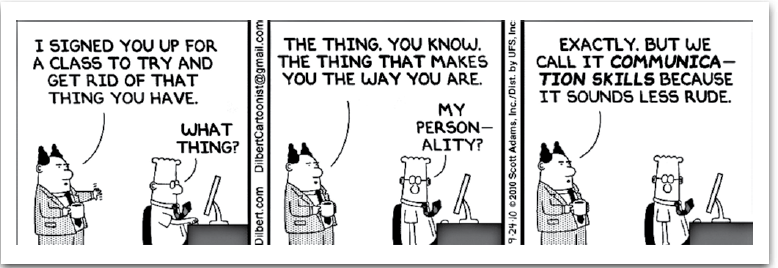
Leia a tirinha que mostra o diálogo do personagem Dilbert (de óculos, sentado ao computador) com o seu chefe.


<https://tinyurl.com/y95p2e6a> Acesso em: 07.11.2017. Adaptado.


Na última quadrícula, o chefe menciona “habilidades de comunicação” (communication skills) com a intenção de

A
mascarar o desejo de que Dilbert tente se livrar da própria personalidade.
B
exaltar a necessidade da comunicação como afirmação da individualidade.
C
criticar a timidez de Dilbert que, segundo o chefe, não é uma pessoa comunicativa.
D
promover melhorias das relações com os empregados, por meio da comunicabilidade.
E
incentivar o pensamento e a discussão por meio do questionamento e da comunicação.